
Why Sourdough Fails: A Timing Guide for Beginners
Learn how temperature, starter strength, hydration, and timing work together to prevent dense or overproofed sourdough loaves.
The Four Variables Behind Sourdough Timing

Sourdough rarely fails because of one mistake. Fermentation temperature, starter strength, dough hydration, and your schedule constantly influence one another. Warm dough ferments faster, while cool dough moves slowly. A vigorous starter can raise a loaf quickly, but a weak or recently fed starter may need more time before it is ready. Hydration matters too: wetter doughs often ferment rapidly and feel loose, while lower-hydration doughs may appear slower and easier to handle.
Think of a recipe’s timing as a flexible estimate rather than a fixed appointment. A dough mixed in a warm kitchen may finish bulk fermentation hours before the same dough prepared in winter. Likewise, a starter that has doubled in four hours is working differently from one that takes twelve. For beginner baking, the most reliable approach is to watch the dough as well as the clock. Look for a smoother surface, visible bubbles, a gentle rise, and a soft, elastic feel. These signs are more useful than following a timetable blindly and are the foundation of practical sourdough troubleshooting.
Diagnosing Dense Loaves and Overproofing
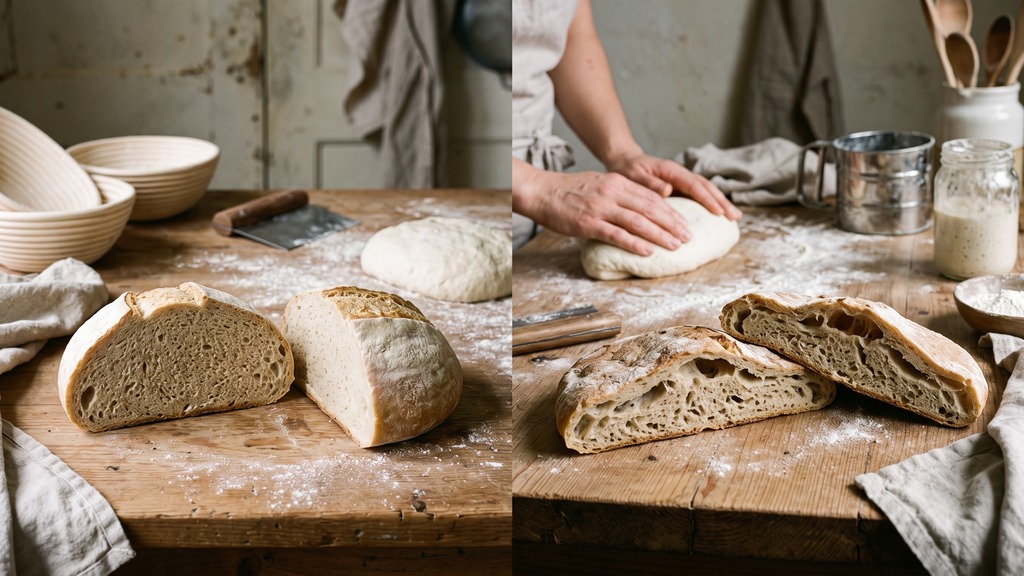
A dense loaf often points to insufficient fermentation, but several causes can lead to the same result. If the starter was used before it reached peak activity, the dough may lack enough gas-producing power. A cool room, short bulk rise, or overly stiff dough can also slow fermentation. Dense sourdough may have a tight crumb, limited oven spring, and a heavy, gummy center. Next time, use a reliably active starter and extend bulk fermentation until the dough has visibly expanded and feels aerated, rather than adding more yeast or buying new equipment.
Overproofing creates the opposite problem. Dough that rises too far can become fragile, sticky, and difficult to shape. It may spread across the counter, lose its structure, or bake into a flat loaf with a weak crust. This commonly happens when a warm dough is left on the counter for a schedule designed for a cooler kitchen. If the dough has doubled dramatically and collapses when handled, shorten the next fermentation or refrigerate it earlier. Keeping brief notes about room temperature, feeding time, dough feel, and bake results makes sourdough troubleshooting much more precise.
Build a Flexible Schedule That Works

Start with a schedule that gives you checkpoints instead of rigid deadlines. Feed your starter early enough for it to become active before mixing. After combining the dough, allow a short rest, then complete several gentle folds during the first part of bulk fermentation. From there, judge progress by volume, bubbles, elasticity, and temperature. If your kitchen is warm, check the dough sooner; if it is cool, expect a longer rise. A simple room-temperature thermometer can help, but careful observation is more important than collecting specialized equipment.
For busy bakers, use the refrigerator to create control rather than to rescue every mistake. Shape the dough once it has fermented sufficiently, then chill it overnight and bake it the next day. If the dough is already very puffy, refrigerate promptly; if it is dense and inactive, chilling will not replace missing fermentation. Measured ingredients, a reusable banneton, and a focused instruction card—such as those used in a progressive Crumbwise Sourdough project—can reduce guesswork while you build repeatable habits. With practice, timing becomes a skill you can adjust, not a source of frustration.